Articles for May 2026

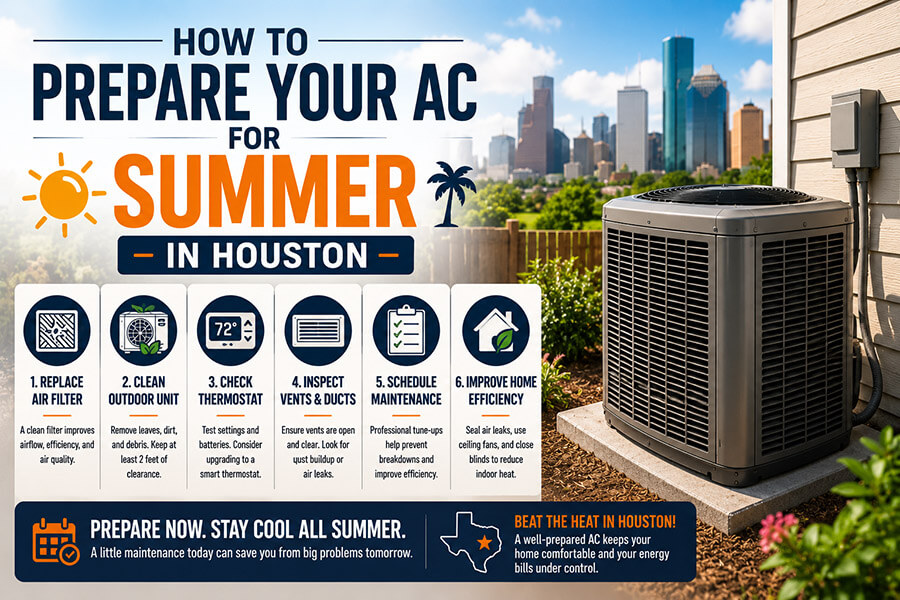
How to Prepare Your AC for Summer in Houston

How to Prepare Your AC for Summer in Houston

Houston summers bring high temperatures, humidity, and heavy demand on air conditioning systems. Preparing your AC before summer arrives can improve efficiency, reduce breakdowns, and keep your home comfortable.

Replace the Air Filter

A clean air filter helps maintain proper airflow and system performance.

Dirty filters can cause:

  • Reduced cooling
  • Higher energy bills
  • Frozen coils
  • Extra strain on the HVAC system

During Houston summers, filters may need replacement more frequently.

Dirty Air Filters Restrict Airflow

Dirty filters reduce airflow and force the system to work harder.

Common results include:

  • Frozen coils
  • Weak cooling
  • Higher indoor temperatures
  • System shutdowns

Replacing filters regularly is one of the easiest ways to improve AC performance during Houston summers.

Clean Around the Outdoor Unit

The outdoor condenser needs proper airflow to operate efficiently.

Before summer:

  • Remove leaves and debris
  • Trim nearby plants
  • Keep at least two feet of clearance around the unit

Houston storms and humidity can quickly create buildup around outdoor equipment.

Check the Thermostat

Make sure your thermostat is working correctly before temperatures rise.

Consider:

  • Testing temperature settings
  • Replacing batteries
  • Upgrading to a programmable thermostat

Smart thermostats can help Houston homeowners improve energy efficiency.

Inspect Air Vents and Ductsmponents Fail

Blocked vents and dirty ducts reduce airflow throughout the home.

Check for:

  • Furniture blocking vents
  • Dust buildup
  • Uneven airflow

Good airflow helps your AC cool more effectively during Houston heat.

Schedule Professional Maintenance

Annual HVAC maintenance is one of the best ways to prevent summer breakdowns.

A professional inspection may include:

  • Checking refrigerant levels
  • Cleaning coils
  • Inspecting electrical components
  • Testing system performance
  • Clearing drain lines

Preventive maintenance is especially important in Houston’s climate.

Look for Warning Signs Early

Small problems can become major repairs if ignored.

Watch for:

  • Strange noises
  • Weak airflow
  • Water leaks
  • Higher energy bills
  • Warm air from vents

Addressing issues early may prevent emergency repairs during peak summer temperatures.

Improve Home Energy Efficiency

Reducing heat inside your home can help your AC work less.

Simple improvements include:

  • Sealing air leaks
  • Using ceiling fans
  • Closing blinds during the day
  • Adding insulation

These steps can improve comfort and reduce cooling costs in Houston.

Final Thoughts

Preparing your AC for summer in Houston helps improve reliability and efficiency during the hottest months of the year. Simple maintenance steps, combined with professional HVAC service, can reduce breakdowns and keep your home cool all summer long.

Why Your AC Stops Working During Houston Heat Waves

Why Your AC Stops Working During Houston Heat Waves

Houston heat waves place extreme demand on air conditioning systems. During periods of intense heat and humidity, many homeowners experience sudden AC failures or poor cooling performance.

Your AC Is Working Harder Than Normal

During Houston heat waves, air conditioners may run almost continuously to maintain indoor temperatures.

This extra workload can cause:

  • Overheating components
  • Increased wear and tear
  • Higher energy consumption

Older systems are especially vulnerable during extreme temperatures.

Dirty Air Filters Restrict Airflow

Dirty filters reduce airflow and force the system to work harder.

Common results include:

  • Frozen coils
  • Weak cooling
  • Higher indoor temperatures
  • System shutdowns

Replacing filters regularly is one of the easiest ways to improve AC performance during Houston summers.

Refrigerant Levels Are Low

Low refrigerant levels make it difficult for the AC system to remove heat from your home.

Signs include:

  • Warm air from vents
  • Longer cooling cycles
  • Ice buildup
  • Reduced cooling capacity

Heat waves often make refrigerant problems more noticeable.

Outdoor Units Overheat

The outdoor condenser unit releases heat from your home. During extreme Houston temperatures, the condenser may struggle to cool properly.

Problems can occur when:

  • The unit is dirty
  • Airflow is blocked
  • Components are worn out

Keeping the outdoor unit clean and clear can improve performance.

Electrical Components Fail

High temperatures can stress capacitors, contactors, and other electrical parts.

During Houston heat waves, electrical failures often lead to:

  • AC not starting
  • Frequent cycling
  • Sudden shutdowns

These problems usually require professional HVAC repair.

Thermostat Problems

Sometimes the issue is not the AC itself but the thermostat.

Incorrect thermostat readings can cause:

  • Constant running
  • Short cycling
  • Uneven cooling

Modern smart thermostats may improve temperature control and efficiency.

Lack of Preventive Maintenance

Many AC failures during Houston heat waves are preventable.

Routine maintenance helps:

  • Identify worn components
  • Improve airflow
  • Maintain efficiency
  • Reduce emergency breakdowns

Scheduling maintenance before summer is important in Texas.

Final Thoughts

Houston heat waves create difficult conditions for HVAC systems. Dirty filters, refrigerant leaks, overheating, and electrical failures are some of the most common reasons air conditioners stop working during extreme temperatures. Regular maintenance can help keep your system reliable when you need it most.

When Should You Replace Your HVAC System in Texas?

When Should You Replace Your HVAC System in Texas

Texas weather can put significant strain on HVAC systems, especially in cities like Houston where air conditioners run for much of the year. Knowing when to replace your HVAC system can help you avoid expensive repairs and improve energy efficiency.

Your HVAC System Is More Than 10–15 Years Old

Most HVAC systems last between 10 and 15 years with proper maintenance. In Houston, heavy usage can shorten that lifespan.

Older systems often:

  • Break down more frequently
  • Use more energy
  • Struggle to cool the home evenly

If your system is aging, replacement may be more cost-effective than continued repairs.

Your Energy Bills Keep Increasing

A sudden rise in electricity bills may indicate your HVAC system is losing efficiency.

Older units in Texas often work harder during long summers, causing:

  • Higher cooling costs
  • Longer run times
  • Increased wear on components

New energy-efficient systems can significantly reduce monthly utility bills.

Frequent Repairs Are Becoming Common

Occasional repairs are normal, but repeated breakdowns can become expensive quickly.

You may want to replace your HVAC system if:

  • Repairs happen multiple times per year
  • Major components continue failing
  • Repair costs are adding up

Many Houston homeowners replace systems when repair costs become difficult to justify.

Uneven Temperatures Throughout the Home

If some rooms stay hot while others cool properly, your HVAC system may no longer perform efficiently.

Common causes include:

  • Aging equipment
  • Weak airflow
  • Failing components
  • Improper system sizing

A newer HVAC system can improve comfort and airflow throughout the house.

Your AC Uses R-22 Refrigerant

Older air conditioners may still use R-22 refrigerant, which has been phased out.

Because R-22 is harder to find:

  • Repairs can become very expensive
  • Refrigerant costs continue increasing
  • Replacement parts may be limited

Replacing the system is often the better long-term investment.

Your System Runs Constantly During Houston Summers

Houston heat and humidity can push older HVAC systems to their limits.

If your AC:

  • Runs continuously
  • Struggles to reach the thermostat setting
  • Fails during extreme heat

…it may no longer be capable of cooling your home efficiently.

Benefits of Replacing Your HVAC System

Installing a new HVAC system offers several advantages:

  • Better energy efficiency
  • Lower utility bills
  • Improved indoor comfort
  • Quieter operation
  • Better humidity control

Modern systems are designed to handle Texas heat more effectively.

Final Thoughts

Replacing an HVAC system is a major investment, but waiting too long can lead to higher repair costs and reduced comfort. If your system is older, inefficient, or struggling during Houston summers, it may be time to consider upgrading to a newer unit.

How Much Does AC Repair Cost in Houston, TX?

how_much_does_ac_repair_cost_houston

Air conditioning repairs are common in Houston because HVAC systems run heavily during long, hot summers. Repair costs can vary depending on the problem, the age of the unit, and the type of system installed in your home.

Average AC Repair Costs in Houston

Most homeowners in Houston can expect AC repair costs to range between $150 and $1,500.

Here are some common repair price ranges:

  • Thermostat replacement: $150–$350
  • Capacitor replacement: $120–$400
  • Refrigerant recharge: $250–$800
  • Fan motor repair: $300–$700
  • Compressor replacement: $1,200–$2,500

The final cost depends on labor, parts, and system complexity.

What Affects AC Repair Prices?

Several factors influence HVAC repair costs in Houston.

Type of Repair

Minor repairs like replacing a capacitor cost much less than major repairs involving compressors or evaporator coils.

Age of the System

Older AC systems may require harder-to-find parts and more labor. In some cases, replacement may be more cost-effective than repair.

Emergency Service

Emergency AC repair during Houston heat waves often costs more, especially on weekends or holidays.

System Size

Larger HVAC systems usually have more expensive components and may require additional labor.

When Repairs Become Expensive

Some repairs may indicate your HVAC system is reaching the end of its lifespan.

You may want to consider replacement if:

  • Your system is over 10–15 years old
  • Repairs are becoming frequent
  • Energy bills keep increasing
  • Your home cools unevenly

Many Houston homeowners choose replacement instead of paying for repeated major repairs.

How to Reduce AC Repair Costs

Preventive maintenance can lower long-term HVAC expenses.

Simple ways to reduce repair costs include:

  • Replacing air filters regularly
  • Scheduling annual maintenance
  • Keeping outdoor units clean
  • Fixing small problems early

Houston’s climate puts extra stress on AC systems, so regular servicing is important.

Should You Repair or Replace Your AC?

If the repair cost is high, compare it to the value of a new system. A newer HVAC system can improve energy efficiency and lower monthly utility bills.

A professional HVAC inspection can help determine the best option for your home.

Final Thoughts

AC repair costs in Houston vary widely depending on the issue and the condition of the system. While small repairs are usually affordable, larger repairs may signal it is time for a replacement. Routine maintenance is the best way to avoid expensive breakdowns during Houston summers.

Top 5 AC Problems Homeowners Face in Houston

Top 5 AC Problems Homeowners Face in Houston Top 5 AC Problems Homeowners Face in Houston

Houston homeowners rely heavily on air conditioning for most of the year. With high temperatures, humidity, and long summers, AC systems work harder here than in many other parts of Texas. Knowing the most common air conditioning problems can help you prevent breakdowns and expensive repairs.

1. Frozen Evaporator Coils

One of the most common AC issues in Houston is frozen evaporator coils. This usually happens because of restricted airflow, dirty air filters, or low refrigerant levels.

Signs of frozen coils include:

  • Weak airflow
  • Warm air coming from vents
  • Ice buildup on the indoor unit

Houston’s humidity can make this problem worse, especially during summer.

2. Refrigerant Leaks

Refrigerant helps your AC cool your home. If the system develops a leak, your air conditioner may struggle to keep up with Houston heat.

Common signs include:

  • AC blowing warm air
  • Higher energy bills
  • Hissing sounds near the unit
  • Longer cooling cycles

A licensed HVAC technician should inspect and repair refrigerant leaks quickly.

3. Clogged Drain Lines

Because Houston has humid weather, AC systems remove a lot of moisture from the air. Over time, condensate drain lines can become clogged with dirt, algae, or debris.

This can lead to:

  • Water leaks around the indoor unit
  • Musty smells
  • Mold growth
  • System shutdowns

Regular maintenance helps prevent clogged drain lines.

4. Dirty Air Filters

Dirty air filters are one of the simplest but most overlooked AC problems in Houston homes.

When filters become clogged:

  • Airflow decreases
  • Energy bills increase
  • Indoor comfort drops
  • HVAC components experience more strain

During Houston summers, filters may need replacement every 1–2 months depending on usage.

5. Capacitor or Electrical Failures

Extreme heat in Houston can put stress on electrical components inside your AC system. Capacitors, contactors, and wiring may wear out over time.

Signs of electrical problems include:

  • AC not turning on
  • Clicking noises
  • Frequent system cycling
  • Breaker trips

Electrical repairs should always be handled by experienced HVAC professionals.

How to Prevent Common AC Problems

Routine maintenance is the best way to avoid major AC repairs in Houston. Seasonal inspections help identify small issues before they become expensive breakdowns.

A professional maintenance visit typically includes:

  • Cleaning coils
  • Checking refrigerant levels
  • Inspecting electrical parts
  • Clearing drain lines
  • Testing airflow

Final Thoughts

Houston weather can be tough on air conditioning systems. From frozen coils to electrical failures, AC problems often appear during the hottest months of the year. Regular maintenance and quick repairs can help keep your home comfortable and reduce long-term repair costs.